Crochet Troubleshooting
Curling edges, a scarf that keeps getting wider, mysterious holes, aching hands — every crocheter hits these. The good news: almost every problem has a small number of predictable causes and a clear fix. This is your symptom-to-solution guide.
What Is Crochet Troubleshooting?
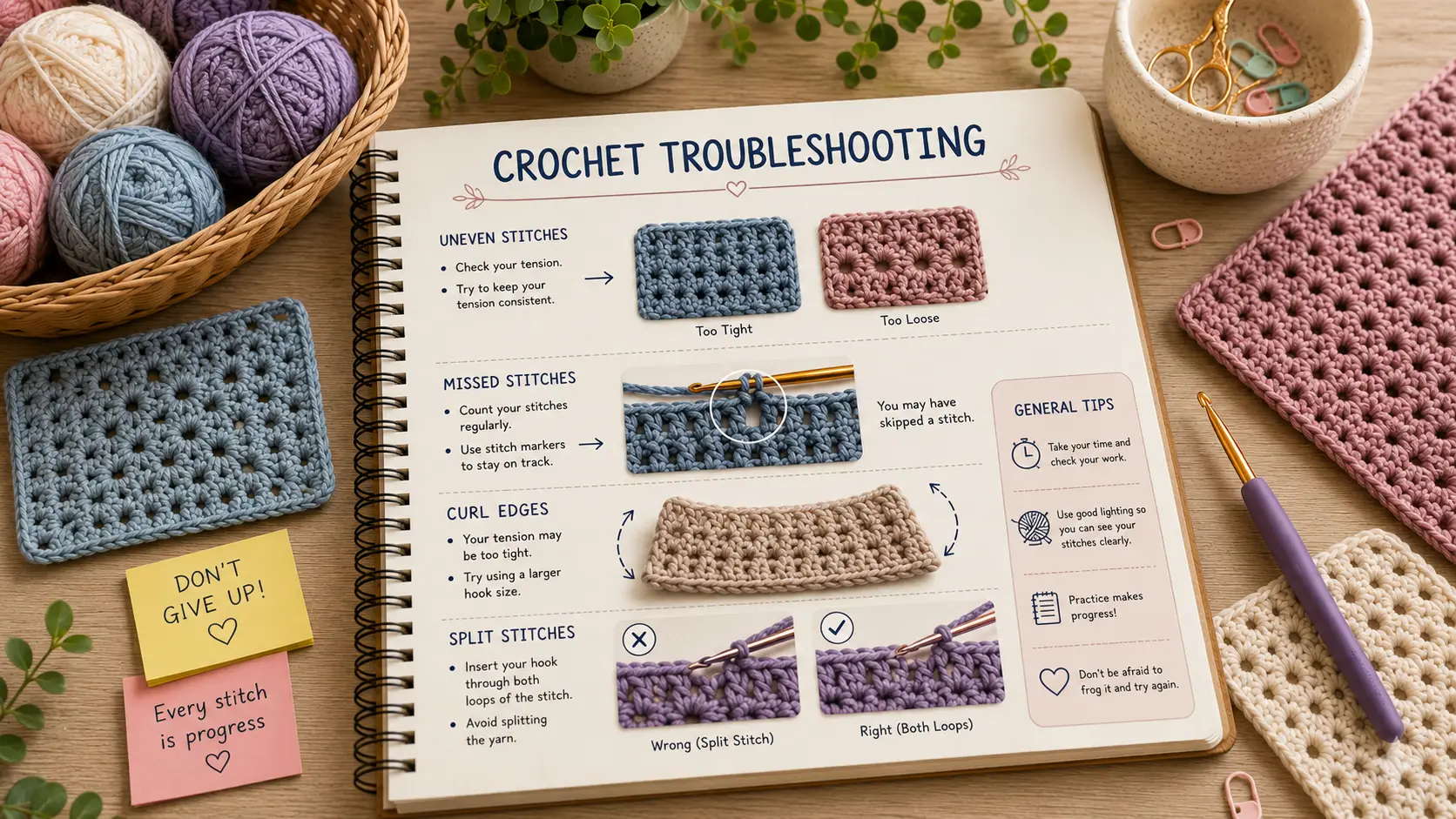
Crochet troubleshooting is the skill of diagnosing what has gone wrong with a piece of crochet and knowing how to fix it. Curling, slanting edges, a project that changes width, holes in the fabric, work that looks messy, the wrong finished size — these are the everyday frustrations that every crocheter, beginner or experienced, runs into.
Here is the reassuring truth: crochet problems are not random or mysterious. They come from a surprisingly small set of causes — mostly tension, stitch count, and hook or gauge — and each cause has a clear, repeatable fix. Once you learn to read a symptom and trace it back to its cause, troubleshooting becomes fast and almost satisfying, rather than defeating.
This category is organized to work like a diagnostic manual: find your symptom, understand the cause, apply the fix. It builds directly on the fundamentals in crochet basics — especially common crochet mistakes — and connects to the shape-specific fixes in shape troubleshooting.
Most Problems Are One of Three
Tension too tight or uneven, a stitch count that's drifting, or a hook/gauge mismatch. Check those three and you'll explain the vast majority of crochet problems.
Counting Is the First Test
Whatever the symptom, the first diagnostic step is almost always the same: count your stitches against what the pattern expects.
Mistakes Are Normal
Every skilled crocheter made all of these mistakes first. Troubleshooting isn't a sign you're bad at crochet — it's how you get good at it.
The Crochet Problem Solver
Find what you’re seeing, read the likely cause, and apply the fix. This table covers the problems crocheters hit most.
| Symptom | Likely Cause | Fix |
|---|---|---|
| Edges slant or wave | Gaining or losing stitches at the ends | Count each row; mark the first and last stitch |
| Work curls into a tube | Tight tension or a tight foundation chain | Loosen up; larger hook for the chain; block it |
| Getting wider each row | Adding stitches (often the turning chain) | Follow the turning-chain rule; count every row |
| Getting narrower each row | Missing the last stitch of the row | Mark the last stitch so you always work it |
| Holes and gaps | Tension too loose or hook too big | Tighten tension; drop a hook size |
| Bumpy, uneven stitches | Inconsistent tension | Steady, relaxed pace; practice; block |
| Project is the wrong size | Gauge doesn't match the pattern | Swatch; change hook size to match gauge |
| Circle bowls or ruffles | Wrong increase rate for the stitch | Match the circle formula's magic number |
| Hands ache or cramp | Grip/tension too tight; thin hook | Relax; take breaks; use an ergonomic hook |
Each of these has a full guide below. For shape-specific issues like circles and spheres, see the dedicated shape troubleshooting guide.
The Four Families of Crochet Problems
Nearly every crochet problem falls into one of these groups. Knowing the family points you straight to the cause.
Tension Problems
Uneven, bumpy, too-tight, or too-loose fabric. Tension is the root of more problems than any other single cause — and the one that improves most with practice.
Edge & Shape Problems
Slanting edges, waving sides, curling, and work that won't lie flat. Usually a stitch-count or tension issue, and almost always fixable with counting and markers.
Counting Errors
Work that grows wider or narrower over time. Adding or losing stitches at the edges is the culprit — caught instantly by counting each row.
Gaps, Gauge & Comfort
Holes in the fabric, projects that come out the wrong size, and aching hands. Solved with the right hook size, tension, and a comfortable setup.
Browse Every Troubleshooting Guide
Each guide diagnoses one problem in depth — the causes, the step-by-step fix, and how to stop it happening again.
Why Is My Crochet Curling?
The causes of curling flat work — and every way to make it lie flat.
Read the fixFixing Uneven Tension
Why stitches come out uneven and how to train steady, even tension.
Read the fixCrochet Edges Not Straight
Stop slanting and waving edges with counting and stitch markers.
Read the fixGetting Wider or Narrower
Find and fix the edge stitches you're accidentally adding or losing.
Read the fixCrochet Full of Holes
Close up unwanted gaps with the right hook size and tension.
Read the fixCrochet Gauge Problems
Why your project is the wrong size and how to hit the pattern's gauge.
Read the fixHow to Fix Crochet Mistakes
Frog, tink, and rework errors — including mistakes several rows down.
Read the fixWhy Crochet Looks Messy
The habits and fixes that turn rough-looking work into neat fabric.
Read the fixCrochet Hurts My Hands
Ease hand strain and cramping with grip, breaks, and ergonomic tools.
Read the fixHow to Fix a Split Stitch
Spot and repair split or dropped stitches before they unravel.
Read the fixAll Troubleshooting Guides
The complete, up-to-date list of every troubleshooting guide on the site.
How to Fix a Split Stitch in Crochet (and Stop Splitting Yarn)
Learn how to fix a split stitch in crochet and stop splitting your yarn. Understand why the hook splits the yarn, how to repair it, and how to prevent it happening.
Crochet Hurts My Hands: How to Ease and Prevent Hand Pain
Does crochet hurt your hands? Learn why crochet causes hand and wrist pain, how to ease it with grip, breaks, and stretches, and which tools reduce strain.
Why Does My Crochet Look Messy? How to Get Neat, Even Work
Why does my crochet look messy? Learn the habits that make crochet look untidy, from uneven tension to busy yarn, and simple ways to get neat, even, professional work.
How to Fix Crochet Mistakes: Frogging, Tinking, and More
Learn how to fix crochet mistakes with frogging and tinking. Find out when to undo your work, how to rip back safely, and how to fix errors a few rows down.
Crochet Gauge Problems: Why Your Project Is the Wrong Size
Struggling with crochet gauge problems? Learn what gauge is, why your project comes out the wrong size, how to make a gauge swatch, and how to fix gauge by changing your hook.
Why Is My Crochet Full of Holes? Causes and How to Fix Gaps
Why is my crochet full of holes? Learn what causes unwanted gaps in crochet, from loose tension to a hook that is too big, and how to make firm, even fabric.
Why Is My Crochet Getting Wider or Narrower? The Simple Fix
Why is my crochet getting wider or narrower? Learn why your stitch count drifts, how to find the added or lost stitches, and how to keep your work an even width.
Why Are My Crochet Edges Not Straight? Fix Slanting and Waving
Why are my crochet edges not straight? Learn why edges slant, wave, or go crooked, and how counting stitches and marking your edges keeps your crochet nice and even.
How to Fix Uneven Crochet Tension (and Get Even Stitches)
Learn how to fix uneven crochet tension. Understand what causes bumpy, uneven stitches and get practical tips to develop steady, even tension and neat crochet.
Why Is My Crochet Curling? Causes and How to Fix It
Why is my crochet curling? Learn the common causes of curling crochet, from tight tension to a tight foundation chain, and simple fixes to make your work lie flat.
The Three Causes Behind Almost Everything
Learn to check these three and you can diagnose the vast majority of crochet problems yourself.
1. Tension
How tightly and consistently you hold the yarn. Too tight causes curling, stiffness, and hand strain; too loose causes holes and floppy fabric; uneven tension causes bumpy, messy stitches. Tension is the single biggest cause of beginner problems — and the one that improves most with practice. Learn to fix it in fixing uneven tension.
2. Stitch Count
How many stitches you have, and whether it's staying constant. A drifting count causes slanting edges, work that gets wider or narrower, and shapes that distort. Counting every row and marking your edge stitches catches these before they grow. It starts with counting stitches.
3. Hook & Gauge
Whether your hook suits your yarn, and whether your gauge matches the pattern. The wrong hook size causes holes, stiffness, or the wrong finished dimensions. A gauge swatch and a hook change fix it. Get the pairing right with the hooks guide and yarn guide.
A Simple Diagnostic Checklist
- 1. Name the exact symptom — curling, slanting, widening, holes, messy, wrong size.
- 2. Count your stitches against what the pattern expects.
- 3. Check your tension — too tight, too loose, or uneven?
- 4. Check your hook size against the yarn and pattern gauge.
- 5. Apply the matching fix — then re-check a few rows later.
When to Undo and Rework
Not every imperfection needs fixing. A slightly uneven stitch or minor tension wobble usually disappears in the finished piece and isn’t worth ripping back. But a structural problem — a drifting count, a hole, a mistake that will be visible — is worth correcting before it compounds.
When a fix is needed, you have options: tink (undo stitch by stitch) for small, recent errors, or frog (pull back rows at once) for bigger ones. Both recover your yarn completely, so nothing is wasted. Learn the techniques in how to fix crochet mistakes and what is frogging. Frogging isn’t failure — it’s just iteration.
Crochet Troubleshooting: Frequently Asked Questions
Why is my crochet curling?
Crochet curls most often because of tight tension, a foundation chain that is tighter than the rows above it, or a dense stitch like single crochet. Loosen your tension, work the foundation chain with a hook one size larger, and block the finished piece. A curling flat circle instead means your increases are wrong.
Why are my crochet edges not straight?
Uneven, slanting, or wavy edges come from accidentally adding or losing stitches at the ends of rows — usually by working into or skipping the turning chain, or missing the last stitch. Count your stitches every row and place a stitch marker in the first and last stitch of each row.
Why does my crochet keep getting wider?
Your work grows wider when you add stitches at the edges, most often by working an extra stitch into the turning chain at the start of a row, or into the very first stitch when the turning chain already counts as one. Count each row and follow your pattern's turning-chain rule consistently.
Why is my crochet getting narrower?
Your work shrinks when you lose stitches at the edges — usually by missing the last stitch of a row, which hides under the previous row's turning chain. Mark the last stitch of every row with a stitch marker so you always work into it.
Why does my crochet have holes or gaps?
Unwanted holes come from tension that is too loose, a hook that is too large for the yarn, or working into the wrong part of the stitch. Tighten your tension, drop a hook size, and make sure you insert the hook fully under both top loops of each stitch.
Why does my crochet look messy or uneven?
A bumpy, irregular look almost always comes from inconsistent tension — some stitches pulled tight, others left loose. Tension evens out with practice; work at a steady, relaxed pace, use smooth light-colored yarn while learning, and block the finished piece to even out the stitches.
Why is my crochet the wrong size?
Size problems come from gauge — the relationship between your tension, yarn, and hook. If a project is too small, your tension is tight or your hook too small; if too big, the reverse. Make a gauge swatch and change your hook size until your gauge matches the pattern.
Why do my hands hurt when I crochet?
Aching hands usually mean you are gripping the hook or holding the yarn too tightly, or using a thin standard hook for long sessions. Relax your grip, take regular breaks, stretch your hands, and try an ergonomic hook with a cushioned handle to reduce strain.
Prevent Problems Before They Start
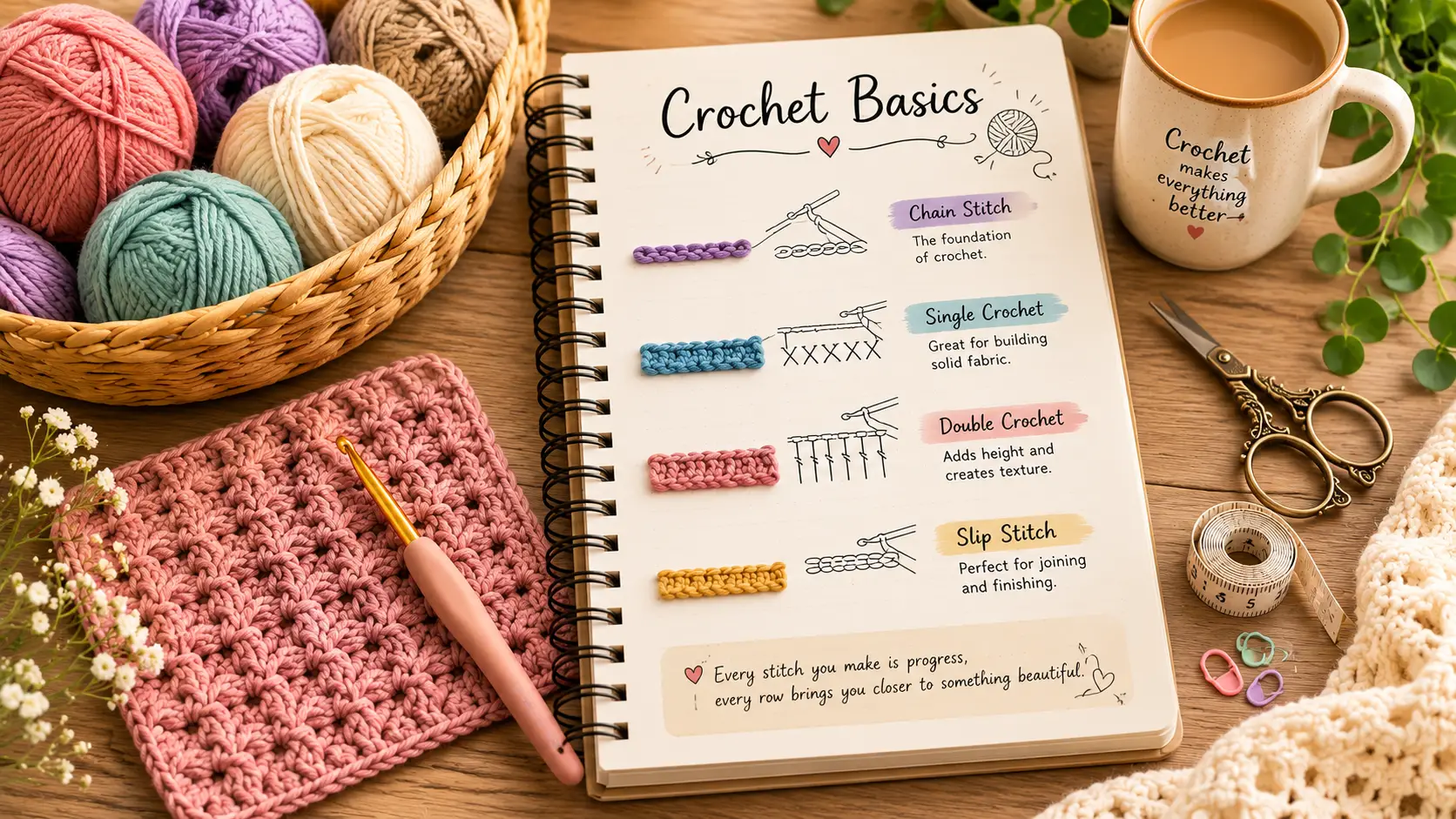
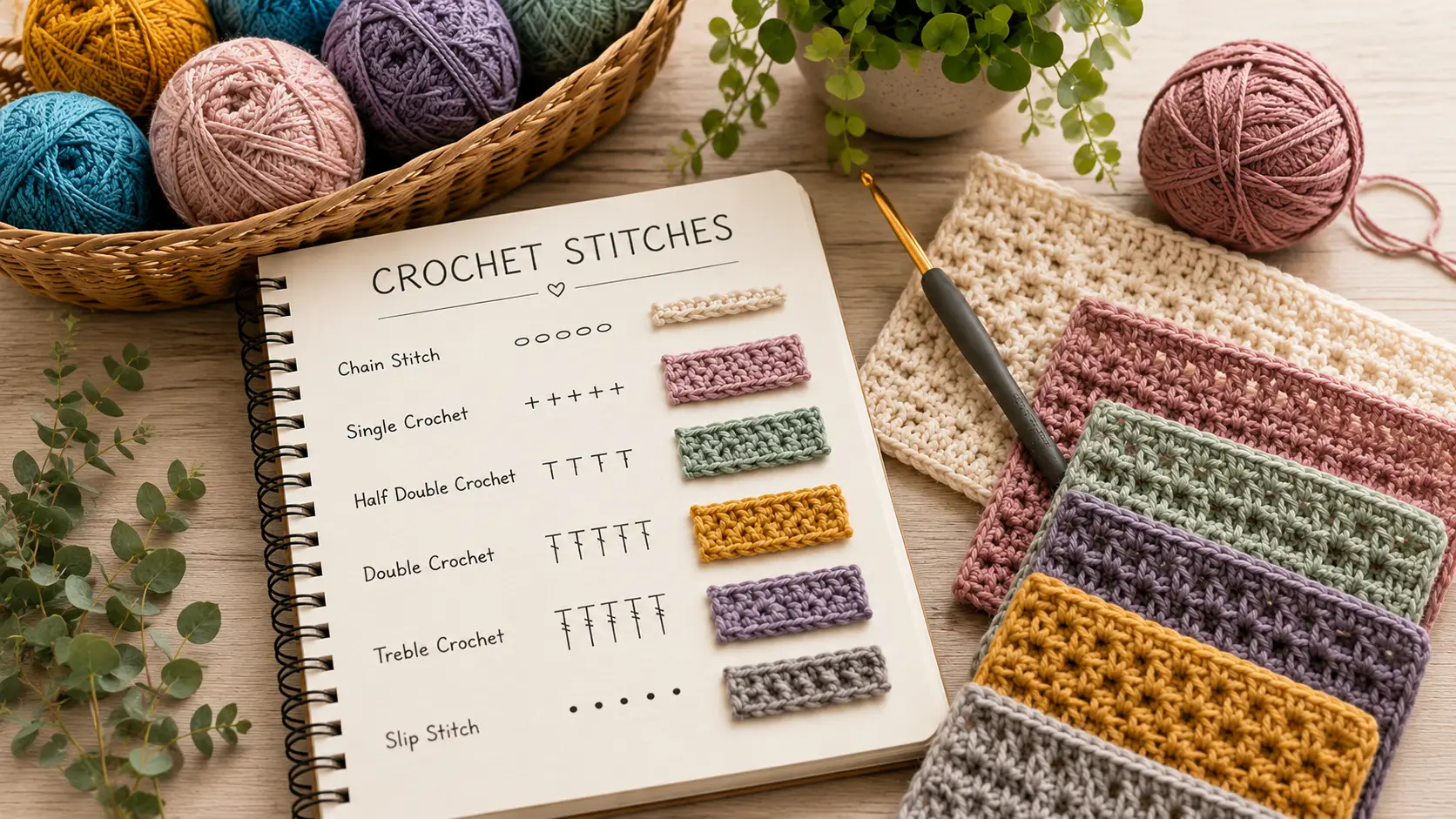
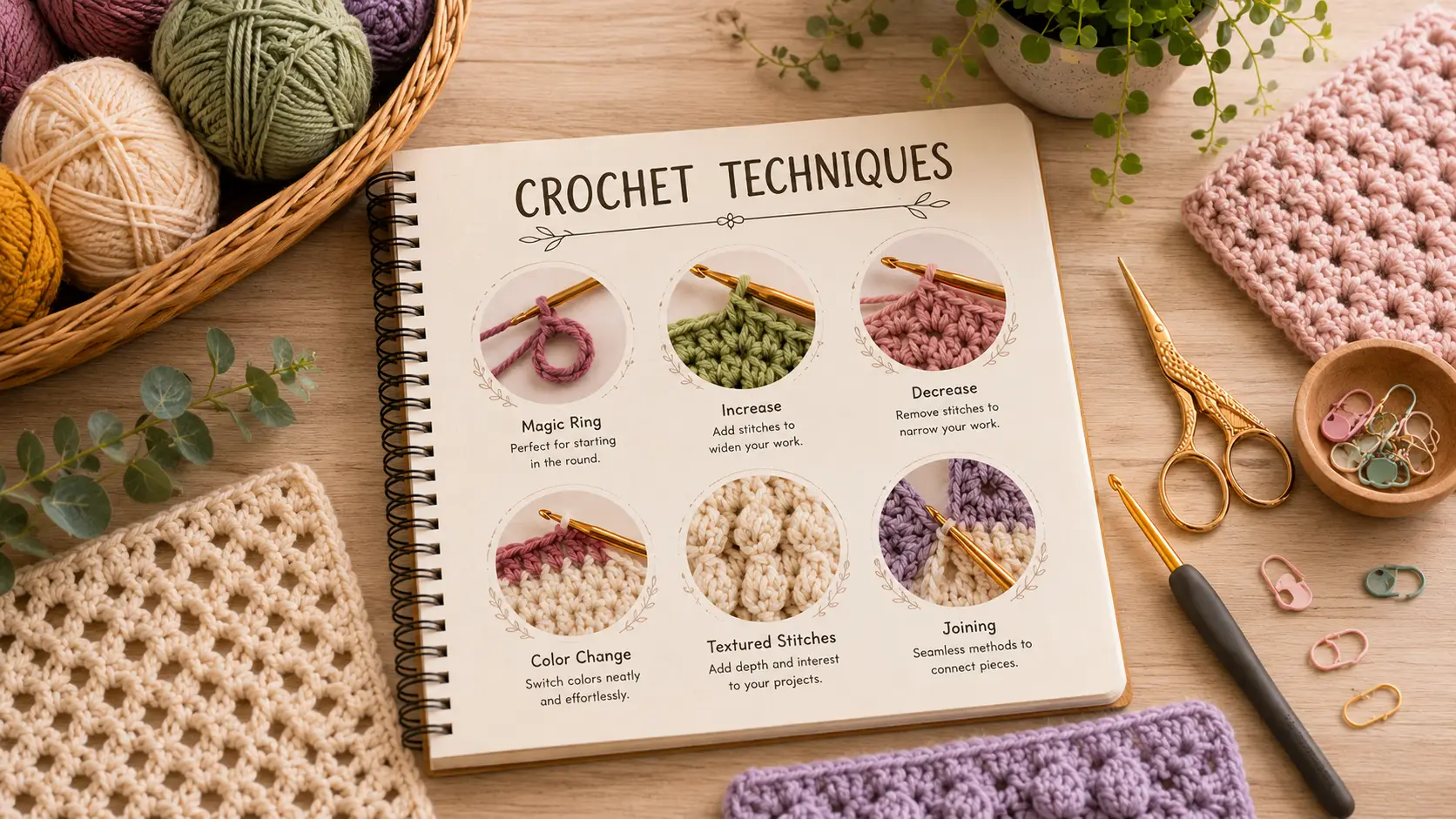
Strong fundamentals mean fewer things to troubleshoot. Explore the basics, stitches, and techniques.
Is Your Crochet Curling?
Curling is the number-one beginner frustration — and one of the easiest to fix once you know the cause. Start here.
Fix Curling Crochet →