Crochet Stitches, From First Loop to Lace
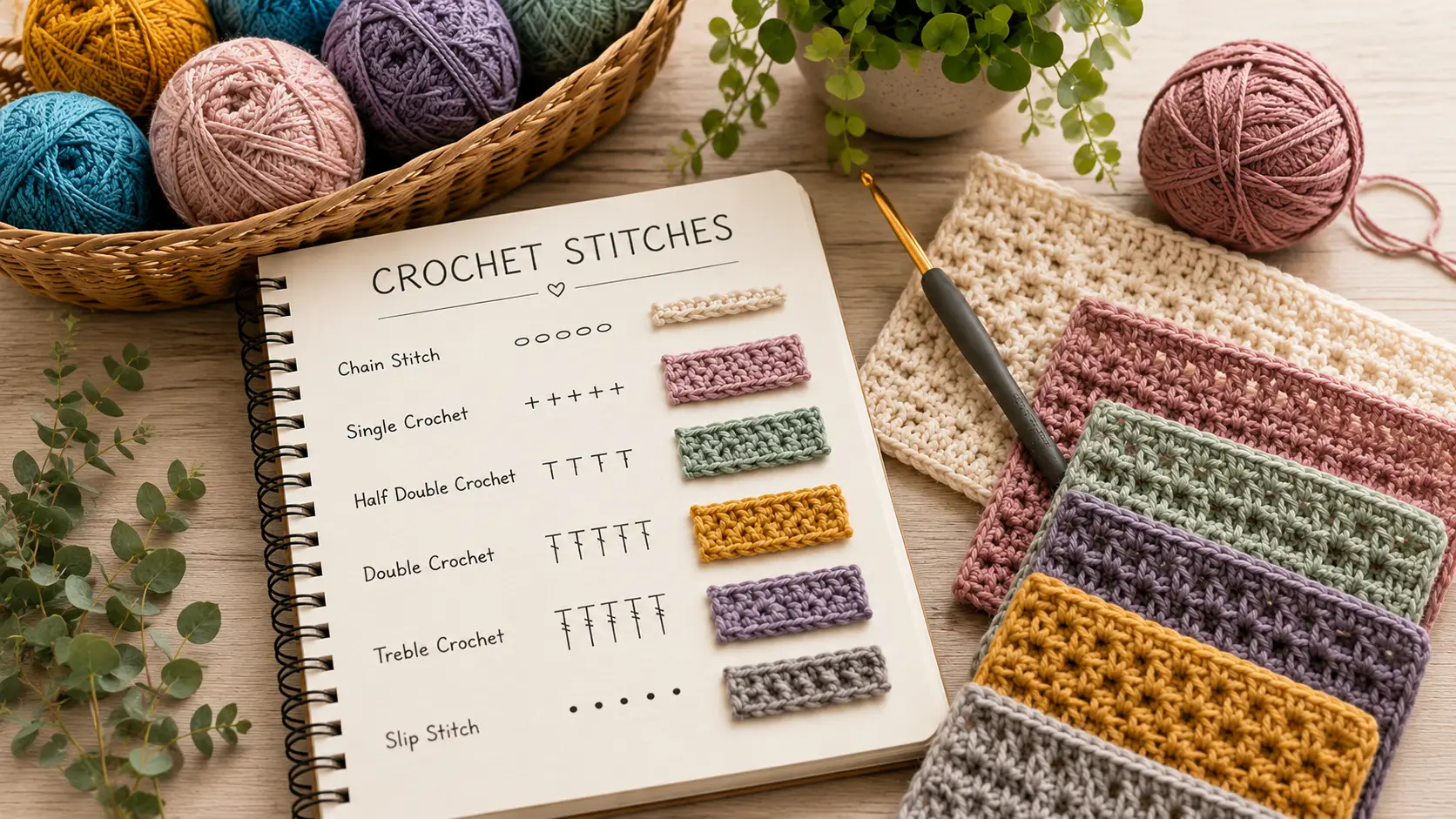
Every crochet stitch is a small variation on the same simple motion — yarn over and pull through. This is the master guide to understanding them all: how they are built, how tall they stand, the fabric they create, and exactly when to reach for each one.
What Are Crochet Stitches?
A crochet stitch is a single, repeatable unit of looped fabric made with a hook and yarn. Where knitting holds many live loops on two needles, crochet works one stitch at a time, completing each before moving to the next. That single-loop approach is what makes crochet so approachable — and it is why every stitch, no matter how complex it looks, comes down to the same two actions: a yarn over (wrapping the yarn around the hook) and pulling a loop through another loop.
What separates one stitch from another is mostly two things: how many times you yarn over before you insert the hook, and how many times you pull through to finish. A single crochet skips the starting yarn over and pulls through twice. A double crochet adds one yarn over at the start and pulls through three times in pairs. A treble adds two. Each addition makes the stitch taller and changes the character of the fabric it builds.
Understanding stitches as variations on one motion — rather than as a long list of unrelated techniques to memorize — is the single most useful mental shift a new crocheter can make. Once you see the pattern, learning a new stitch becomes a matter of counting yarn overs and pull-throughs, not starting from scratch each time.
The Anatomy of a Stitch
Every finished stitch has a top — two loops forming a small “V” that you work the next row into and count for stitch counts — and a body or post, the vertical part whose height defines the stitch. Learning to read the V is the skill that makes counting stitches and following a pattern possible.
One Motion, Many Results
The same yarn-over-and-pull-through motion produces a flat slip stitch, a dense single crochet, an airy treble, or a pillowy puff — depending only on how you combine and repeat it. Master the motion and the whole library opens up.
Built on the Basics
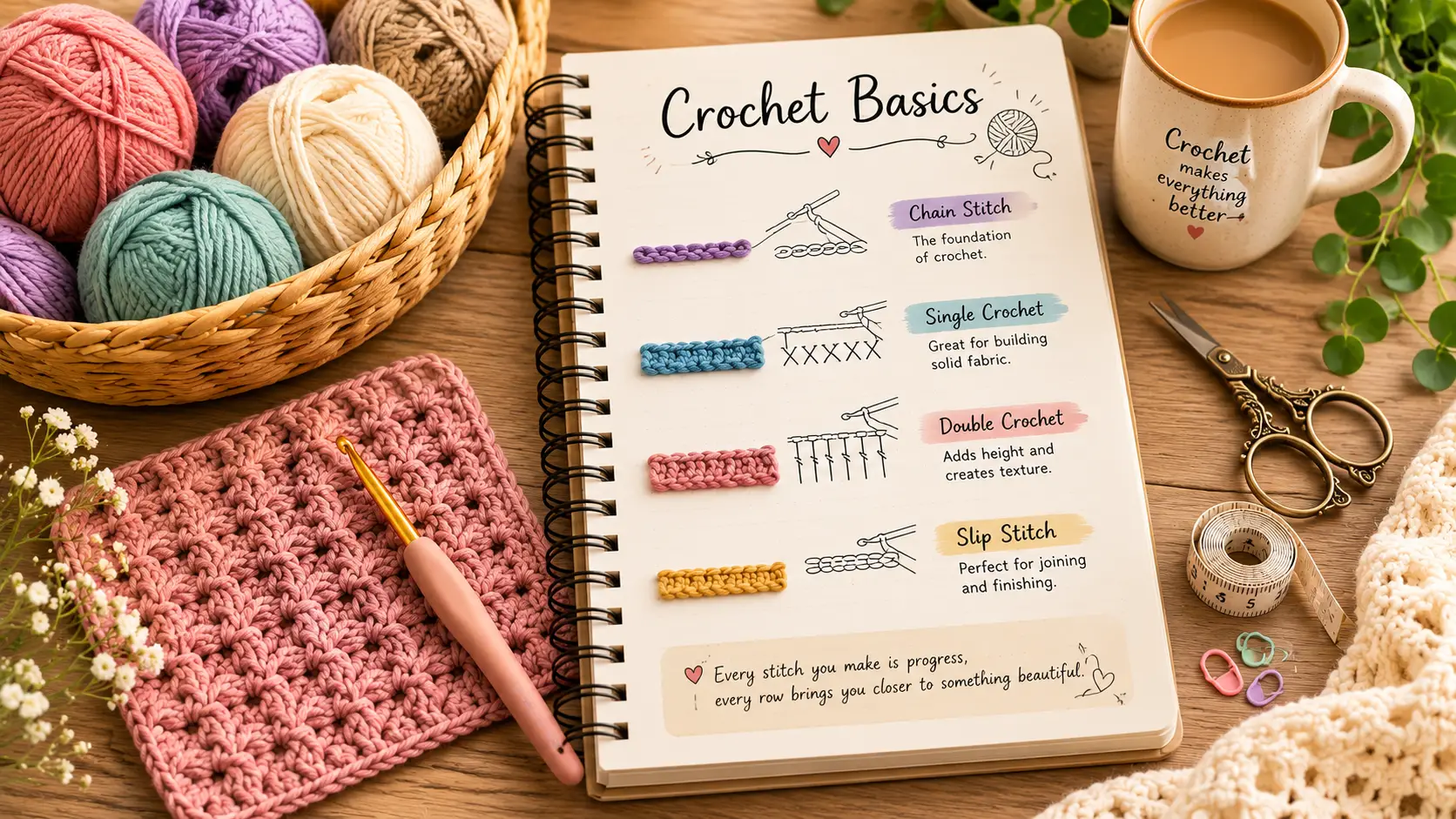
If you have not yet made your first foundation chain or learned single crochet, start with Crochet Basics first — this library assumes you can hold a hook, chain, and work a basic row.
Why Stitches Are the Heart of Crochet
Stitches are not just a means to an end — they are the design. The choice of stitch determines how a finished piece looks, feels, drapes, stretches, and wears. The very same yarn and hook can become a stiff, structured basket or a soft, flowing shawl depending entirely on which stitch you choose and how you combine them. When you understand stitches deeply, you stop being limited to following patterns exactly and start making informed decisions about your own projects.
Stitch knowledge also unlocks pattern reading. Patterns are written in the shorthand of stitch abbreviations — ch, sc, hdc, dc, tr, sl st — and a pattern is essentially a sequence of stitches in a particular order and place. The better you know each stitch, the faster a pattern reads, and the easier it becomes to spot and fix a mistake before it grows. A confident grasp of stitches is the bridge between “I can follow simple instructions” and “I can make almost anything.”
Finally, stitches are where texture, density, and drape are born. A tight single crochet creates a firm, opaque fabric perfect for toys and bags that need to hold their shape. A tall double or treble creates an open, drapey fabric ideal for wraps and summer tops. Decorative stitches like the bobble and puff add a third dimension — literal bumps and pillows that catch the light. Every project decision starts with a stitch.
Stitch Height: The Key to Understanding Every Stitch
The single most useful way to organize crochet stitches is by height. Height is set by how many times you yarn over before inserting the hook — and it determines the turning chain, the texture, and the speed of every project.
| Stitch | Abbr. | Yarn Overs | Relative Height | Best For |
|---|---|---|---|---|
| Slip stitch | sl st | 0 | Almost flat | Joining, edging, moving across |
| Single crochet | sc | 0 | Shortest true stitch | Dense fabric, amigurumi, edges |
| Half double crochet | hdc | 1 (before) | Medium | Soft warm fabric, hats, blankets |
| Double crochet | dc | 1 (before) | Tall | Blankets, garments, fast projects |
| Treble crochet | tr | 2 (before) | Extra tall | Lace, open work, shells |
Because taller stitches need more height at the start of a row, each stitch has its own turning chain — the chains you make to lift your work to the right level before the first stitch of a new row. Single crochet usually turns with one chain; double crochet with three; treble with four. Getting the turning chain right is one of the most common things beginners need to learn when moving from short to tall stitches.
The Four Families of Crochet Stitches
Every crochet stitch falls into one of four broad families. Knowing the family tells you roughly how a stitch behaves before you even make it.
Foundation Stitches
The chain and slip stitch. They do not build tall fabric on their own — instead they start your work, join pieces, and travel across a row. Every project begins with a foundation chain.
Basic Stitches
Single, half double, and double crochet. These are the everyday stitches that make up the bulk of most patterns. Learning all three gives you the height range to make almost anything.
Tall Stitches
Treble and double treble crochet. Taller stitches grow quickly, create open and airy fabric, and form the structure of lace and decorative motifs.
Texture & Decorative Stitches
Bobble, puff, popcorn, shell, and cluster stitches. Built by combining basic stitches, these add dimension, bumps, fans, and visual interest to an otherwise flat fabric.
Browse the Crochet Stitch Library
Each stitch below has its own in-depth guide — step-by-step instructions, common mistakes, troubleshooting, and the projects it suits best. Start anywhere.
Chain Stitch
The starting row almost every project is built on. A single loop pulled through the loop on your hook.
Learn this stitchSlip Stitch
The shortest stitch — used to join, edge, and move across work without adding height.
Learn this stitchSingle Crochet
The first true stitch most beginners learn. Dense, firm, and easy to count — covered in Crochet Basics.
Learn this stitchHalf Double Crochet
A versatile in-between stitch with a soft, slightly textured fabric and a distinctive third loop.
Learn this stitchDouble Crochet
The workhorse of crochet — quick, airy, and used everywhere from blankets to garments.
Learn this stitchTreble Crochet
A tall, open, elegant stitch used in lace, shells, and fast-growing projects.
Learn this stitchBobble Stitch
Several stitches joined at the top to create a raised, rounded bump for dotted texture.
Learn this stitchPuff Stitch
Soft, pillowy loops pulled to the same height and gathered — wonderfully squishy.
Learn this stitchShell Stitch
A fan of stitches worked into one point — the backbone of countless lacy patterns.
Learn this stitchPopcorn Stitch
A firmer, more sculptural cousin of the bobble — compared head-to-head in our guide.
Learn this stitchAll Crochet Stitch Guides
The complete, up-to-date list of every stitch guide on the site.
How to Crochet a Crab Stitch (Reverse Single Crochet Edging)
Learn how to crochet a crab stitch, also called reverse single crochet. This simple edging adds a neat, corded, twisted border to any project. Step by step with tips.
How to Crochet a Cable Stitch (Easy Twisted Texture)
Learn how to crochet a cable stitch for beautiful twisted texture that looks like knitting. See how cables are made with post stitches, common mistakes, and best projects.
How to Crochet a Popcorn Stitch (Step by Step)
Learn how to crochet a popcorn stitch step by step. The popcorn stitch makes a firm, raised bump for bold texture. See how to work it, common mistakes, and best projects.
How to Double Crochet: Step by Step for Beginners
Learn how to double crochet step by step. The double crochet (dc) is a tall, quick, versatile stitch. See how to make it, the turning chain, common mistakes, and best projects.
How to Single Crochet: A Step by Step Guide for Beginners
Learn how to single crochet step by step. The single crochet (sc) is the shortest, most popular beginner stitch. See how to make it, common mistakes, and the projects it suits.
How to Crochet a Zigzag Stitch (Chevron Pattern)
Learn how to crochet a zigzag stitch, also called the chevron. See how increases and decreases make sharp peaks and valleys, with color striping tips and common mistakes.
How to Crochet a Ripple Pattern (Classic Wave Blanket)
Learn how to crochet a ripple pattern for soft, wavy blankets. See how increases and decreases create gentle ripples, plus color striping tips and common mistakes.
How to Crochet the Rib Stitch (Stretchy Ribbing)
Learn how to crochet the rib stitch for stretchy, knit look ribbing. See the easy back loop only method and the post stitch method, plus common mistakes and best uses.
How to Crochet a Picot Stitch (Plus What a Picot Is)
Learn what a picot is and how to crochet a picot stitch. This tiny decorative loop adds pretty bumps and points to edgings and lace. Step by step with tips and variations.
How to Crochet the Moss Stitch (Simple Woven Texture)
Learn how to crochet the moss stitch, also called the linen or granite stitch. This simple, beginner friendly stitch makes flat, woven textured fabric that resists curling.
How to Crochet a Loop Stitch (Fur and Fringe Texture)
Learn how to crochet a loop stitch to create soft loops, fur, and fringe. See how the loop stitch is made step by step, common mistakes, and the projects it suits.
How to Crochet Ruffles (Easy Frilly Edging)
Learn how to crochet ruffles and frills for a full, flouncy edge. See how increasing creates ruffles, how to control the fullness, common mistakes, and the best projects.
How to Crochet a Shell Border (Fan Edging for Any Project)
Learn how to crochet a shell border to finish blankets and garments with pretty fans. See how to work shells around an edge, turn corners, and space them evenly.
How to Crochet a Scalloped Edge (Pretty Wave Border)
Learn how to crochet a scalloped edge for a pretty, wavy border. See how scallops are made with groups of stitches, step by step instructions, variations, and best projects.
How to Crochet Edging on a Blanket (Best Edging Ideas)
Discover the best crochet edging ideas for a blanket, from simple single crochet to crab stitch, picot, shell, and scallop. See how each edging looks and how to choose one.
How to Crochet a Blanket Border (Base Round and Corners)
Learn how to crochet a blanket border step by step. See how to work an even base round, turn neat corners, and choose a border style to finish any blanket beautifully.
Bobble Stitch vs Popcorn Stitch: Which Texture Should You Use?
Bobble stitch vs popcorn stitch — compare how each is made, how firm and defined the bump is, yarn use, difficulty, and the best projects for each textured crochet stitch.
Slip Stitch Uses in Crochet: 9 Ways to Use This Stitch
Discover the many uses of the crochet slip stitch — joining rounds, seaming, edging, surface crochet, ribbing, and more — with tips, mistakes, and troubleshooting for each.
Common Half Double Crochet Mistakes (and How to Fix Them)
The most common half double crochet mistakes — turning chain confusion, slanting edges, the third loop, uneven tension — and clear, practical fixes for each one.
Half Double Crochet vs Double Crochet: Which Stitch to Use
Half double crochet vs double crochet — compare height, density, drape, speed, yarn use, and best projects, with a clear side-by-side guide to choosing the right stitch.
Puff Stitch Crochet: Soft, Pillowy Texture Made Simple
A complete puff stitch crochet tutorial — what it is, how to work it step by step, when to use it, common mistakes, troubleshooting, and how it compares to bobble and popcorn stitches.
Shell Stitch Crochet: The Fan That Makes Lace Look Easy
Master the crochet shell stitch — what it is, how to work it, when to use it, common mistakes, troubleshooting, and the lacy, scalloped projects it creates.
Bobble Stitch Crochet: How to Make Raised, Rounded Bumps
Learn the crochet bobble stitch — what it is, how to work it step by step, when to use it, common mistakes, troubleshooting, and how it compares to the popcorn and puff stitches.
Treble Crochet (TR): The Tall, Airy Stitch for Lace and Speed
A complete guide to the treble crochet (tr), also called triple crochet — what it is, how to work it, when to use it, common mistakes, troubleshooting, and the lacy projects it creates.
Half Double Crochet (HDC): The Perfect In-Between Stitch
Everything about the half double crochet (hdc) — what it is, how to work it, the third loop, when to use it, common mistakes, troubleshooting, and how it compares to single and double crochet.
Slip Stitch Crochet: The Shortest, Most Useful Stitch
Master the crochet slip stitch (sl st) — what it is, how to work it, when to use it for joining, edging, and seaming, plus common mistakes and troubleshooting.
Chain Stitch Crochet: The Foundation of Every Project
A complete guide to the crochet chain stitch — what it is, how to make it, foundation chains, chain spaces, turning chains, common mistakes, and the projects it builds.
Beginner Stitches
If you are new to crochet, learn the stitches in this order: chain, then slip stitch, then single crochet, then half double crochet, then double crochet. This sequence builds naturally — each stitch reuses the skills of the one before it, and the jump from single to double crochet introduces the starting yarn over that every taller stitch depends on.
These five stitches are enough to make scarves, dishcloths, blankets, bags, hats, and the structure of most amigurumi. Resist the urge to rush ahead to fancy textures before your tension on the basics is even — a wobbly bobble almost always traces back to uneven double crochets underneath it.
Advanced & Decorative Stitches
Once the basics feel automatic, the decorative stitches open up a new dimension. The bobble, puff, and popcorn create raised bumps; the shell fans several stitches into one point for scalloped, lacy edges; clusters and V-stitches shape openwork. Every one of these is built by combining basic stitches you already know — a bobble is just several unfinished double crochets gathered together at the top.
Advanced stitches reward good tension and careful counting. Because they pack multiple stitches into one space, a small tension error is multiplied and shows quickly. Working a practice swatch first is especially worthwhile before committing a textured stitch to a full project.
How Stitches Shape Your Finished Fabric
The stitch you choose controls four properties of the finished fabric: density, drape, texture, and speed. Short stitches like single crochet pack tightly together, creating a dense, sturdy, opaque fabric with little stretch — ideal for toys, baskets, potholders, and bags. Tall stitches like double and treble crochet leave more space between the loops, producing a lighter, softer, more flexible fabric that drapes well over the body — ideal for shawls, cardigans, and summer tops.
Texture comes from how stitches sit relative to each other. Working into the back loop only creates ridges; alternating stitch heights creates waves; gathering stitches creates bumps. Decorative stitches exist purely to manipulate texture, turning a flat surface into something dimensional.
Speed matters too. Because a single treble covers as much vertical space as three or four single crochets, taller-stitch projects grow far faster. A blanket in double crochet finishes in a fraction of the time of the same blanket in single crochet — though it will use more yarn per stitch and feel more open.

Density
Drape
Texture
Speed
Choosing the Right Stitch for a Project
Start from the result you want. Need something firm that holds its shape — a basket, a toy, a bag? Reach for single crochet or half double crochet. Want something soft and flowing — a wrap, a baby blanket, a market bag? Double crochet, treble, or an openwork shell pattern will serve you better. Want visual interest on a plain background? Scatter bobbles or work a band of puff stitches.
Your yarn and hook matter as much as the stitch. A thick yarn on a large hook exaggerates texture and works up fast; a fine yarn on a small hook makes delicate, detailed fabric. The yarn label always suggests a hook size — that pairing is your reliable starting point, which you then adjust to hit the gauge a pattern calls for.
Why Tension and Gauge Decide Everything
Tension is how tightly you hold and pull the yarn. Even tension makes every stitch the same size, so the fabric lies flat and looks uniform; uneven tension is the root cause of most beginner frustrations. Gauge is the measurable result of your tension — the number of stitches and rows that fit in four inches with a given stitch, yarn, and hook.
Gauge is why two people can follow the same pattern and get different sizes. If your stitches are smaller than the pattern’s gauge, your project comes out small; larger, and it comes out big. For anything that needs to fit, make a gauge swatch first and change your hook size — not your stitches — until your gauge matches. A solid grounding in the basics makes this second nature.
Common Stitch Mistakes
- Wrong stitch height / turning chain. Using a one-chain turn on double crochet (or three on single) throws off your edges. Match the turning chain to the stitch.
- Working into the wrong loop. Slipping under one loop instead of both top loops changes the texture and stitch count. Insert under both Vs unless the pattern says otherwise.
- Losing or adding edge stitches. Missing the last stitch (it hides under the turning chain) or working into the turning chain by mistake makes the fabric slant. Count every row.
- Uneven tension on tall stitches. Double and treble crochet expose tension problems more than short stitches. Keep loops on the hook the same size as you pull through.
How to Learn and Practice Stitches
The fastest way to learn any stitch is the practice swatch. Chain about 20, then work the new stitch row after row until your tension evens out and your edges run straight. A swatch removes the pressure of a “real” project, so you can focus entirely on the motion. Keep your swatches in a small box, labeled — over time they become a personal stitch reference you can feel and compare.
Use a smooth, light-colored, medium-weight yarn and a mid-size hook while learning; they show stitch structure clearly so you can see exactly where the hook goes. Drop a stitch marker in the first and last stitch of each row to train your eye to the edges. Practice one stitch until it feels automatic before adding the next — depth beats breadth when building muscle memory.
When a stitch will not cooperate, slow down and name the problem: too tight, too loose, wrong loop, miscount. Almost every stitch difficulty is one of those four, and each has a simple fix covered in the individual stitch guides.
Crochet Stitches: Frequently Asked Questions
What are the basic crochet stitches every beginner should learn?
The five foundational crochet stitches are the chain (ch), slip stitch (sl st), single crochet (sc), half double crochet (hdc), and double crochet (dc). Together these cover the vast majority of beginner patterns. Once you can work all five with even tension, you can follow most beginner and many intermediate designs. Decorative stitches like the bobble, puff, and shell are all built from these basics.
What is the easiest crochet stitch?
The chain stitch is the easiest because it uses a single motion — yarn over and pull through one loop. After the chain, the single crochet is the easiest true stitch and the one most beginners learn first, because it is short, dense, and easy to see and count.
What is the difference between crochet stitches?
Crochet stitches differ mainly in height and in how many times you yarn over before working the stitch. A single crochet has no starting yarn over and is short; a double crochet has one yarn over and is about twice as tall; a treble crochet has two yarn overs and is taller still. Height changes the texture, density, and drape of the finished fabric.
Which crochet stitch uses the least yarn?
Shorter, denser stitches like single crochet and slip stitch use less yarn per square inch but take more stitches to cover an area. Taller stitches like double and treble crochet use more yarn per stitch but work up faster, so they can cover the same area with fewer stitches. For the same project size, dense stitch patterns generally consume more yarn overall.
What crochet stitch is best for blankets?
Double crochet and half double crochet are popular for blankets because they work up quickly and create a soft, flexible fabric with good drape. Textured stitches like the shell or bobble add visual interest. For a denser, warmer blanket, single crochet or the half double crochet work well.
How many crochet stitches are there?
There are a handful of core stitches — chain, slip, single, half double, double, treble, and double treble — plus dozens of combination and decorative stitches built from them, such as the bobble, puff, popcorn, shell, cluster, and V-stitch. Most patterns use only a small set, so you do not need to memorize them all at once.
Do crochet stitches use US or UK terms?
Both systems exist and use the same names for different stitches. A US single crochet equals a UK double crochet, and a US double crochet equals a UK treble. Always check which terminology a pattern uses before you start, because it changes every stitch in the pattern.
How do I practice crochet stitches?
Make a small practice swatch — chain about 20, then work several rows of one stitch until your tension is even and your edges are straight. Switch stitches each swatch to build a personal stitch reference. Practicing on a swatch rather than a real project lets you focus on technique without worrying about mistakes.
Keep Building Your Crochet Skills
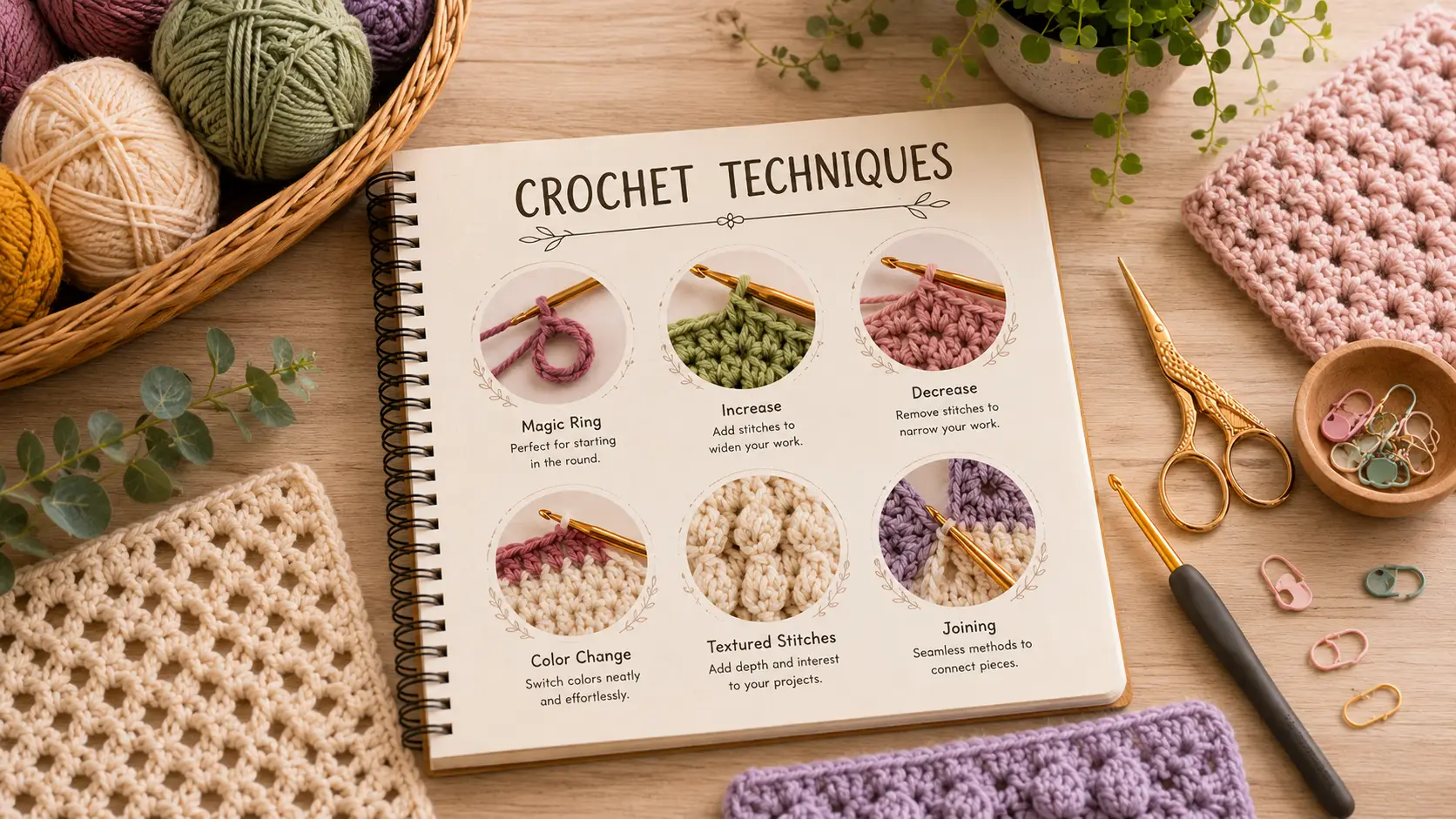
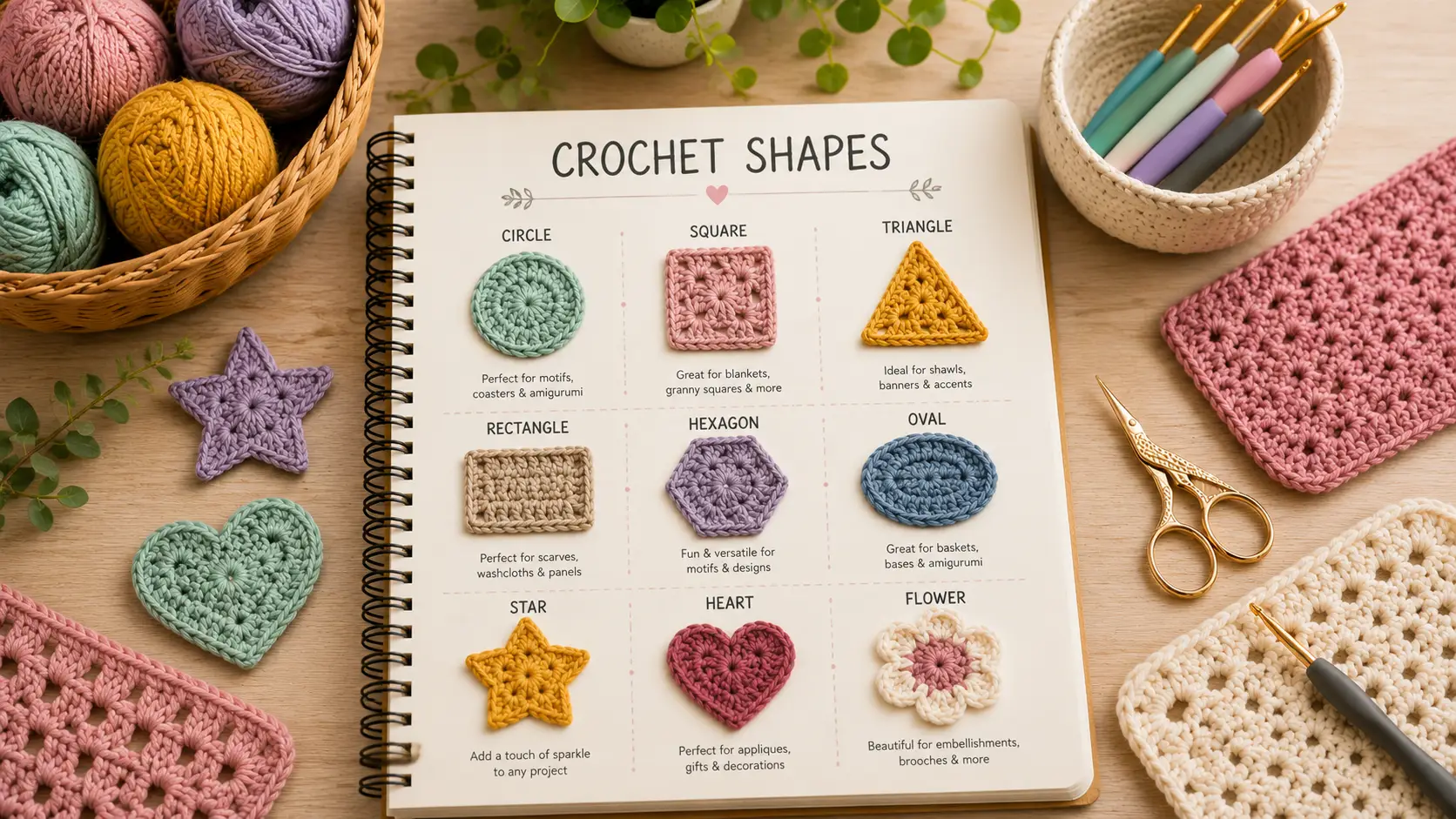
Stitches are one piece of the picture. Explore the rest of the library next.
Master the Foundations First
Stitches build on the basics — the slip knot, the foundation chain, counting, and reading a pattern. If any of those feel shaky, start there and the whole stitch library gets easier.
Go to Crochet Basics →