Essential Crochet Techniques
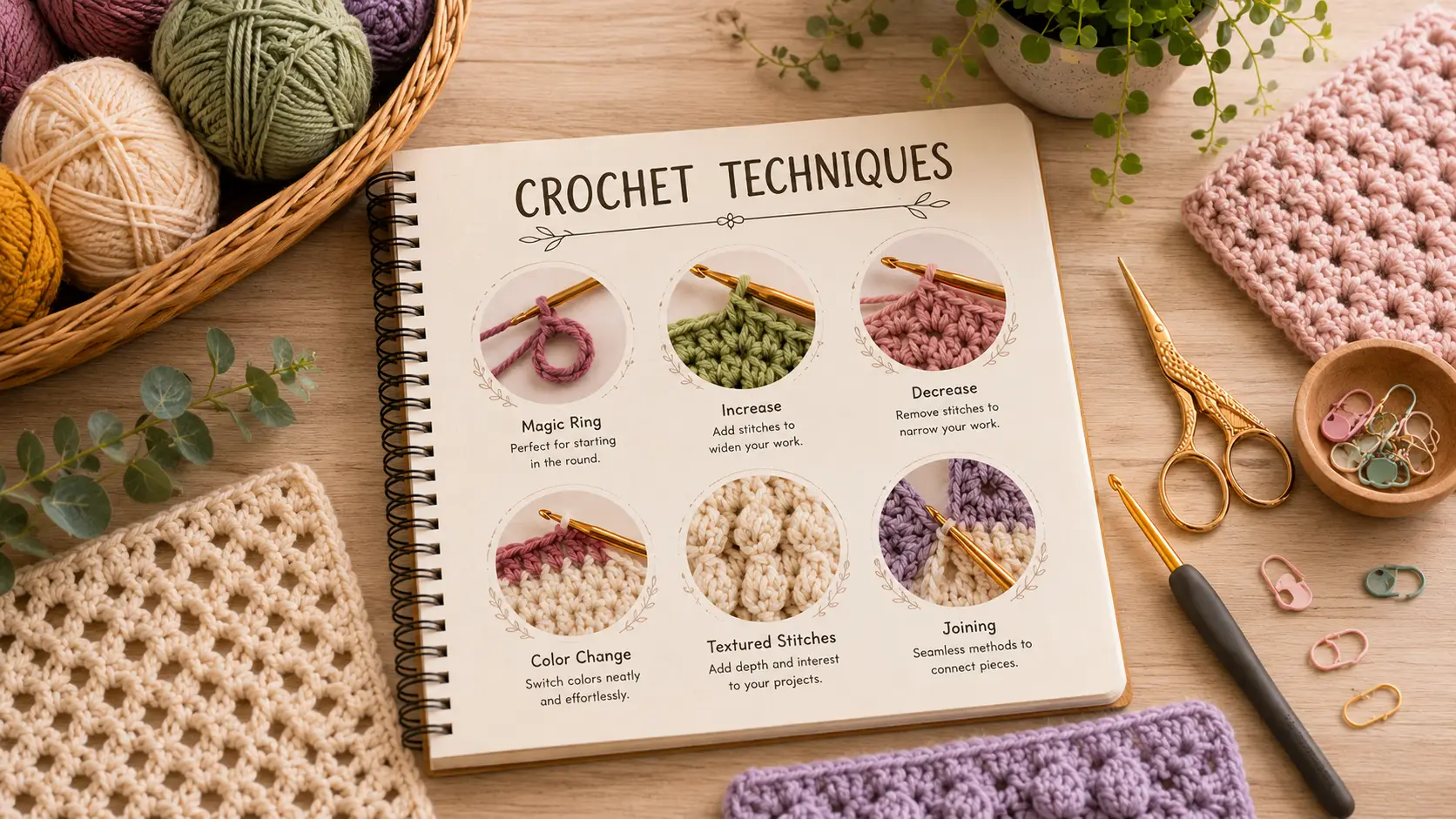
Stitches build fabric — techniques build projects. This is the master guide to the skills that take you from working flat rectangles to shaping, joining, coloring, and finishing real, professional crochet: the magic ring, increasing and decreasing, color changes, blocking, and beyond.
What Are Crochet Techniques?
A crochet technique is a method or skill that goes beyond making an individual stitch — it is how you combine, shape, join, color, and finish stitches to build a complete project. If stitches are the vocabulary of crochet, techniques are the grammar: the rules and methods that turn a pile of stitches into a hat, a blanket, a stuffed animal, or a garment.
Techniques are what bridge the gap between knowing how to crochet and being able to make things. You can know every stitch in the crochet stitch library and still be unable to make a hat without knowing how to work in the round, start with a magic ring, and decrease to shape the crown. The stitches are the same; the techniques are what give them form.
This category covers the full range — from beginner-essential skills like increasing and joining yarn, to intermediate methods like color changes and blocking, to advanced specialties like Tunisian and corner-to-corner crochet. Each one is a distinct, learnable skill, and together they form the complete toolkit of a confident crocheter.
Stitches vs Techniques
A stitch is one repeatable unit — a single crochet, a double crochet. A technique is a method that organizes stitches: increasing, working in the round, changing color, blocking. You use techniques to arrange stitches into shapes and finished objects.
Built on the Basics
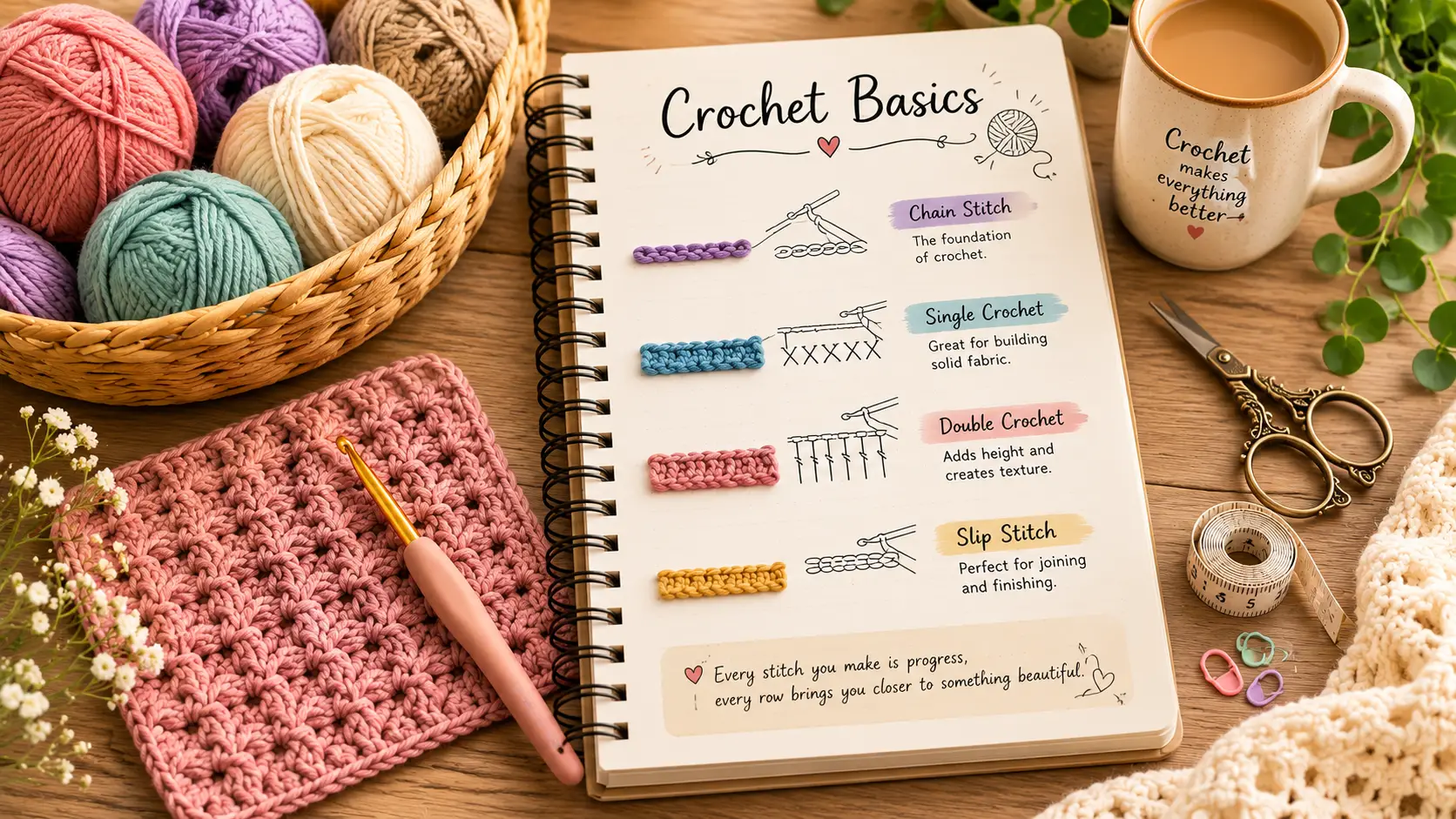
Every technique here assumes you can hold a hook, work a foundation chain, make the core stitches, and read a simple pattern. If you are brand new, start in Crochet Basics and return here when you are ready to shape and build.
Why It Bridges the Gap
Most beginners stall at the same point: they can make fabric but not objects. Techniques are the missing link — the skills that turn rows of stitches into projects with shape, color, and a polished finish.
Why Crochet Techniques Matter
Techniques are the difference between following a pattern blindly and truly understanding what you are making. When you know why a pattern increases six stitches every round, you can spot a mistake before it ruins a circle, adapt a design to a different yarn, or invent your own. Technique knowledge turns you from a copier into a maker.
They also determine the quality of your finished work. Two crocheters can use the same pattern, yarn, and hook and produce wildly different results — and the difference is almost always technique. A clean color change, an invisible yarn join, a properly blocked edge, and well-placed decreases are what make a project look professional rather than homemade. These details are entirely learnable.
Finally, techniques expand what is possible. Without the magic ring, amigurumi has an ugly hole in the center. Without shaping, everything you make is a flat rectangle. Without color changes, every project is a single color. Without blocking, lace stays scrunched and squares refuse to match. Each technique you learn opens a new category of projects, and together they make the entire world of crochet patterns accessible to you.
The Technique Progression Roadmap
Techniques build on each other. Learn them roughly in this order and each one prepares you for the next — from your first shaped circle to advanced specialty methods.
Foundation Skills
Before any technique, you need the basics: holding the hook, the foundation chain, the core stitches, counting, and reading a pattern. Every technique on this page assumes you can work a basic row. If any of that feels shaky, build it first in Crochet Basics — techniques layer on top of solid fundamentals.
Shaping Techniques
Once you can work even rows, learn to shape: the magic ring to start in the round, increasing to widen, and decreasing to narrow. These three techniques turn flat rectangles into circles, hats, baskets, and stuffed toys. Shaping is where crochet becomes three-dimensional.
Construction & Color
Next come the techniques that let projects grow and gain color: joining a new ball of yarn seamlessly, and changing colors cleanly for stripes and motifs. These are everyday skills you will use in nearly every project beyond a single-ball scarf.
Finishing Techniques
A project is not done when the last stitch is made. Blocking shapes and evens your fabric; seaming and weaving in ends complete the construction. Finishing is what separates a homemade look from a handmade one, and blocking in particular transforms lace and motifs.
Specialty Methods
With the essentials mastered, explore specialty methods that open entirely new project types: Tunisian crochet for woven-look fabric, corner-to-corner (C2C) for pixel-art graphgans, and surface embroidery for adding detail. These advanced techniques expand what crochet can do.
Working in Rows vs Working in Rounds
Almost every crochet project is built one of two ways. Understanding the difference is the foundation of all shaping and construction techniques.
| Aspect | Working in Rows | Working in Rounds |
|---|---|---|
| Direction | Turn at the end of each row | Continuous circle, no turning (or joined) |
| Shape produced | Flat panels — scarves, blankets | Tubes & circles — hats, bags, amigurumi |
| Starting method | Foundation chain | Magic ring or chain ring |
| Edges | Two side edges + turning chains | No side seam; a join or spiral instead |
| Common shaping | Increase/decrease at row ends | Evenly spaced increases/decreases per round |
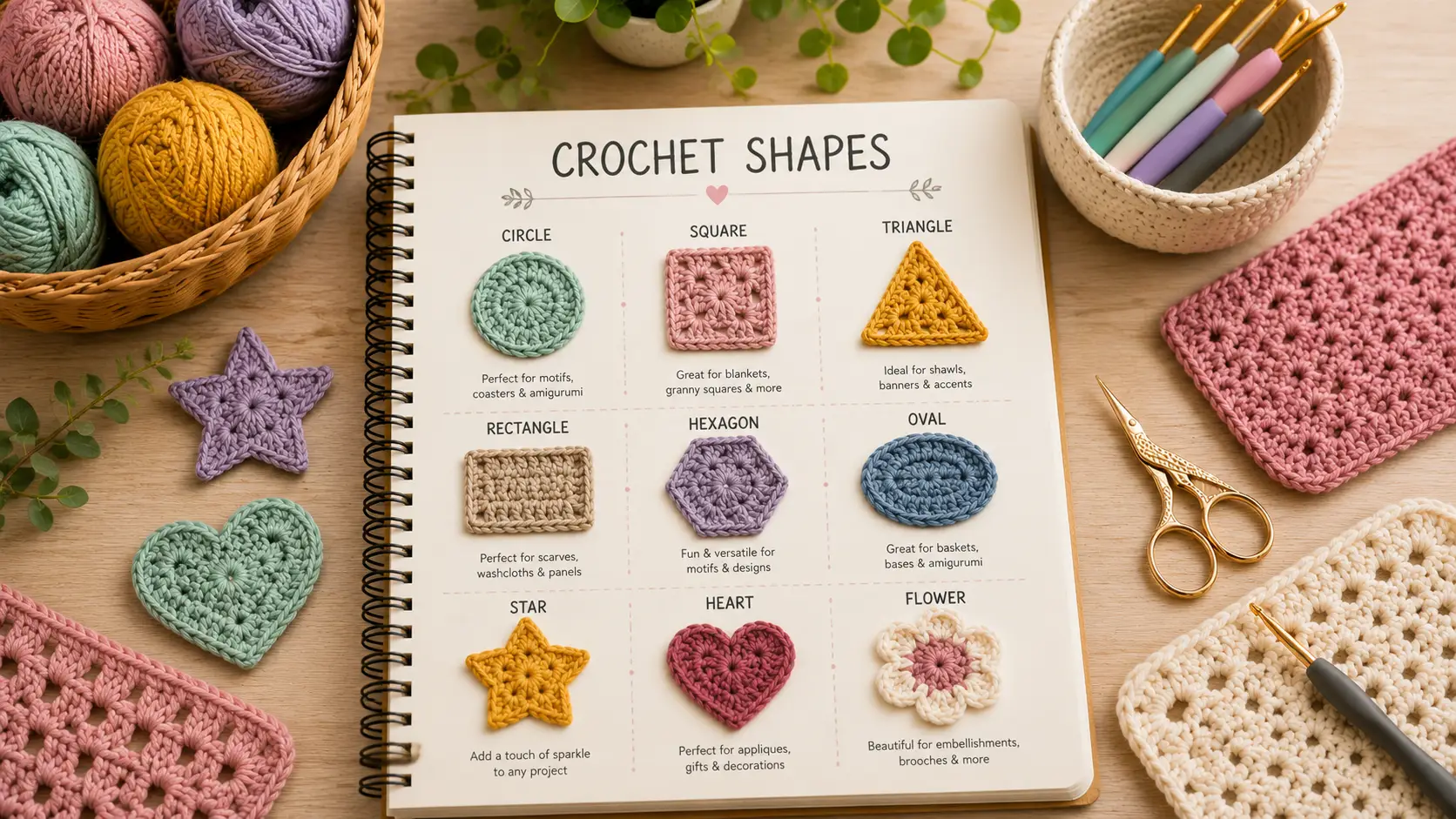
Working in rounds is where the magic ring, evenly-spaced increases, and stitch markers become essential — and it is the gateway to hats, bags, and amigurumi covered in our crochet shapes category. Working in rows relies more on turning chains and edge stitch counts, skills grounded in the crochet basics.
Browse Every Crochet Technique
Each technique below has its own in-depth guide — step-by-step instructions, common mistakes, troubleshooting, expert tips, and project examples. Grouped by what they help you do.
The Magic Ring
Start projects in the round with a closed, hole-free center — essential for amigurumi, hats, and motifs.
Learn this techniqueIncreasing
Add stitches to make fabric wider and build circles, cones, and curves.
Learn this techniqueDecreasing
Remove stitches to taper, close, and sculpt your fabric into three-dimensional forms.
Learn this techniqueJoining New Yarn
Add a fresh ball of yarn mid-project without knots, gaps, or weak spots.
Learn this techniqueChanging Colors
Switch colors cleanly for stripes, motifs, and colorwork with invisible joins.
Learn this techniqueBlocking Crochet
Wet or steam finished pieces to even stitches, open lace, and give a professional finish.
Learn this techniqueBlocking Squares
Make granny squares and motifs identical in size so they join perfectly.
Learn this techniqueTunisian Crochet
A knitting-like method using a long hook and many loops for dense, woven fabric.
Learn this techniqueC2C (Corner to Corner)
Work diagonally in blocks to create graphgan pictures and bold colorwork.
Learn this techniqueEmbroidery on Crochet
Add surface details, faces, and accents to finished crochet with simple stitches.
Learn this techniqueAll Crochet Technique Guides
The complete, up-to-date list of every technique guide on the site.
How to Embroider on Crochet: Add Surface Details & Faces
Learn how to embroider on crochet — surface stitches for faces, flowers, names, and accents. Best stitches, yarn vs floss, step-by-step, common mistakes, and troubleshooting.
How to C2C Crochet (Corner to Corner) for Graphgan Designs
Learn how to C2C crochet — the corner-to-corner technique for graphgans and pixel-art blankets. Step-by-step increases and decreases, reading a graph, color changes, and tips.
What Is Tunisian Crochet? The Knit-Crochet Hybrid Explained
What is Tunisian crochet? Learn how this knit-crochet hybrid works, the long hook, forward and return passes, key stitches, common mistakes, and the projects it suits best.
How to Use Crochet Stitch Markers (Every Way They Help)
Learn how to use crochet stitch markers to track rounds, mark increases, find your first and last stitch, and note the right side. Types of markers and simple tips.
How to Tell the Right Side of Crochet (Front vs Back)
Learn how to tell the right side of crochet from the wrong side. See the clues that reveal the front of your work, why it matters, and how to mark the right side.
How to Block Crochet Squares So They Match and Join Perfectly
Learn how to block crochet granny squares and motifs to the same size for seamless joining. Step-by-step, blocking boards, batch blocking, common mistakes, and troubleshooting.
How to Turn Crochet (Turning Chains Explained)
Learn how to turn your crochet at the end of a row, what a turning chain is, and how tall it should be for each stitch. Simple steps to keep your edges neat and even.
How to Foundation Double Crochet (Stretchy Tall Start)
Learn how to foundation double crochet to start a project with a stretchy, even edge and taller stitches. Step by step instructions, common mistakes, and when to use it.
How to Block Crochet: Wet, Steam & Spray Blocking Explained
What is blocking in crochet and how to do it. Learn wet, steam, and spray blocking, which method suits each fiber, common mistakes, troubleshooting, and when not to block.
How to Foundation Single Crochet (No More Tight Chains)
Learn how to foundation single crochet, which makes your starting chain and first row at once for a stretchy, even edge. Step by step, common mistakes, and when to use it.
How to Crochet Faster (Practical Tips to Speed Up)
Learn how to crochet faster with practical tips on grip, tension, hooks, and stitch choice. Speed up your crochet naturally without straining your hands or losing neatness.
How to Change Color in Crochet: Clean, Invisible Color Changes
Learn how to change color in crochet cleanly — the last-pull-through method, changing color in rows and rounds, carrying yarn, common mistakes, and troubleshooting.
How to Shrink Crochet (Felting and Fixing Loose Fabric)
Learn how to shrink crochet, from felting wool for a dense finish to tightening fabric that came out too big. See which fibers shrink, the methods, and how to control them.
How to Stiffen Crochet (Baskets, Ornaments, and Snowflakes)
Learn how to stiffen crochet so baskets, ornaments, snowflakes, and doilies hold their shape. Compare stiffening methods, how to apply them, and how to shape and dry.
How to Cross Stitch on Crochet (Add Charts and Designs)
Learn how to cross stitch on crochet to add letters, motifs, and charted designs on top of your fabric. See which stitches make the best base and how to work neat crosses.
How to Add Yarn to Crochet: Join a New Ball Seamlessly
Learn how to add a new ball of yarn to crochet without knots or gaps — the standard join, the invisible join, where to join, common mistakes, and troubleshooting.
How to Sew Crochet Pieces Together (Best Seaming Methods)
Learn how to sew crochet pieces together with the best seaming methods, including the whip stitch, mattress stitch, slip stitch join, and single crochet join.
How to Hold Yarn While Crocheting (for Even Tension)
Learn how to hold yarn while crocheting to get smooth, even tension. See common ways to wrap the yarn over your fingers, why it matters, and how to find what works for you.
How to Decrease in Crochet: Taper, Shape, and Close Your Work
Learn how to decrease in crochet — single crochet, hdc, and double crochet decreases, the invisible decrease for amigurumi, where to place them, mistakes, and troubleshooting.
How to Increase in Crochet: Shape Your Fabric With Confidence
Learn how to increase in crochet to shape circles, cones, and curves. Step-by-step increase methods, where to place them, common mistakes, troubleshooting, and project examples.
How to Crochet a Magic Ring (Magic Circle) Step by Step
Learn how to crochet a magic ring (magic circle) for a hole-free center. Step-by-step instructions, common mistakes, troubleshooting, and the projects that need it most.
Shaping: Increasing & Decreasing
Shaping is the technique that makes crochet three-dimensional. An increase adds stitches — usually by working two or more stitches into one — to make the fabric wider. A decrease removes stitches — by working two or more together — to make it narrower. Placed thoughtfully, these two simple moves create circles, spheres, cones, curves, and every shaped object in crochet.
The math of shaping is surprisingly elegant. A flat crochet circle, for example, grows by adding the same number of stitches every round — six for single crochet. Increase too fast and the fabric ruffles; too slow and it cups into a bowl. Learning to read and place increases and decreases is the heart of working in the round.
Dive into the details in our guides on how to increase and how to decrease, and see shaping applied to real forms in Crochet Shapes.
Joining Yarn & Changing Colors
Sooner or later every project runs out of yarn mid-row, or calls for a new color. Joining yarn is the technique for adding a fresh strand seamlessly, without knots or weak spots. Color changing is the closely related skill of switching shades cleanly — and the secret to both is the same: make the switch on the final pull-through of the last stitch in the old yarn.
Done well, these joins are invisible and strong; done poorly, they leave gaps, lumps, or a stray blob of the wrong color. They are everyday techniques — used in stripes, motifs, colorwork, and any project larger than a single ball — and well worth perfecting early.
Learn them in joining a new ball of yarn and changing colors, then put them to work in the beginner pattern hub.

Wet blocking
Steam blocking
Spray blocking
Matching motifs
Blocking & Professional Finishing
Finishing techniques are what give a project its final, polished form. The most transformative is blocking — wetting, spraying, or steaming a finished piece and pinning it into shape as it dries. Blocking relaxes and evens out stitches, opens up lace so the pattern shows, flattens edges that want to curl, and — crucially — makes granny squares and motifs the same size so they join neatly.
Different fibers call for different blocking methods: sturdy wool loves wet blocking and steam, while delicate acrylics need gentle spray or careful low steam to avoid “killing” the fabric. Knowing which method suits your yarn is the key skill. Structured projects like amigurumi and stiff baskets are usually left unblocked so they keep their shape.
Learn the full process in how to block crochet, and the motif-specific method in blocking crochet squares. Pair blocking with the weaving-in-ends skills from Crochet Basics for a truly finished result.
Specialty & Advanced Methods
Once the essentials feel natural, these specialty methods open entirely new categories of projects.
Tunisian Crochet
Worked with a long hook holding many loops at once, Tunisian blends crochet and knitting into a dense, woven-look fabric with its own stitch family.
What is Tunisian crochet?Corner to Corner (C2C)
Worked diagonally in little blocks, C2C is the go-to method for pixel-art 'graphgans' — blankets that form pictures, letters, and bold geometric designs.
Learn C2C crochetEmbroidery on Crochet
Add surface details — faces, flowers, names, accents — to finished crochet using simple embroidery stitches worked over the top of your fabric.
Embroider on crochetCommon Technique Mistakes
- Skipping the stitch marker in the round. Without a marker at the start of each round, it is almost impossible to keep your increase placement and stitch count correct.
- Changing color too late. Switching on a new stitch instead of the last pull-through of the previous stitch leaves a smear of the wrong color and a visible jog.
- Increasing or decreasing in the wrong spot. Misplaced shaping makes circles ruffle or cup and garments distort. Count and place shaping exactly as the pattern specifies.
- Blocking the wrong fiber the wrong way. High heat can permanently flatten acrylic. Always match the blocking method to your yarn’s fiber content.
How to Practice Techniques
The best way to learn a technique is to isolate it on a small practice piece before using it in a real project. To practice increasing and decreasing, crochet a flat circle and a triangle — both are pure shaping exercises. To practice color changes, make a striped swatch and study the back for clean joins. To practice the magic ring, start ten of them in a row until the center pulls perfectly closed.
Use a smooth, light-colored, medium-weight yarn and a comfortable hook so you can see exactly what your hands are doing. Keep a stitch marker handy for anything worked in the round, and a notebook to record what worked. Tension and gauge matter here too: a technique practiced at even tension transfers cleanly to projects, while one practiced sloppily has to be relearned.
Most importantly, practice one technique at a time until it feels automatic. Layering a brand-new technique onto a brand-new stitch onto a brand-new pattern is how beginners get overwhelmed. Master each skill in isolation, then combine them with confidence.
Crochet Techniques: Frequently Asked Questions
What are the most important crochet techniques to learn first?
After the basic stitches, the most valuable techniques to learn first are increasing and decreasing (which shape your fabric), joining a new ball of yarn, and changing colors. These four techniques unlock the vast majority of patterns. From there, the magic ring opens up working in the round, and blocking gives your finished pieces a professional look.
What is the difference between working in rows and working in rounds?
Working in rows means turning your work at the end of each row and crocheting back the other way, creating flat fabric like scarves and blankets. Working in rounds means crocheting in a continuous circle or joined ring without turning, creating tubes and flat circles like hats, bags, and amigurumi. Each uses different starting methods and shaping techniques.
How do you shape crochet projects?
Crochet is shaped mainly by increasing (adding stitches to make the fabric wider) and decreasing (removing stitches to make it narrower). Placing increases and decreases in specific spots creates circles, cones, curves, and three-dimensional forms. The magic ring is the most common way to start a shaped piece worked in the round.
What is a magic ring used for?
A magic ring (also called a magic circle or adjustable ring) is a way to start crocheting in the round that leaves no hole in the center. You pull the ring tight after the first round, closing the middle completely. It is essential for amigurumi, hats, and any project that needs a closed, neat center.
Do you have to block crochet?
Blocking is not always required, but it dramatically improves many projects. Blocking — wetting or steaming a finished piece and shaping it as it dries — evens out stitches, opens up lace, flattens curling edges, and makes granny squares the same size for joining. Structured items like amigurumi and bags usually should not be blocked, while garments, lace, and motifs almost always benefit.
What is the best way to change colors in crochet?
The cleanest color change is made on the last step of the stitch before the new color is needed: work the final yarn-over and pull-through of that stitch with the new color. This places the new color exactly where it should start and keeps the join invisible. The same method works for joining a new ball of the same color.
What is the difference between Tunisian crochet and regular crochet?
Tunisian crochet uses a long hook and keeps many loops on the hook at once, working a forward pass to pick up loops and a return pass to work them off — more like knitting than standard crochet, where only one loop stays on the hook. Tunisian creates a dense, woven-looking fabric and uses its own family of stitches.
How long does it take to learn crochet techniques?
The core shaping and construction techniques — increasing, decreasing, joining yarn, and color changes — can each be learned in a single practice session. Specialty methods like Tunisian, corner-to-corner (C2C), and blocking take a few projects to feel natural. Most crocheters become comfortable with all the essential techniques within a few months of regular practice.
Connect the Skills Together
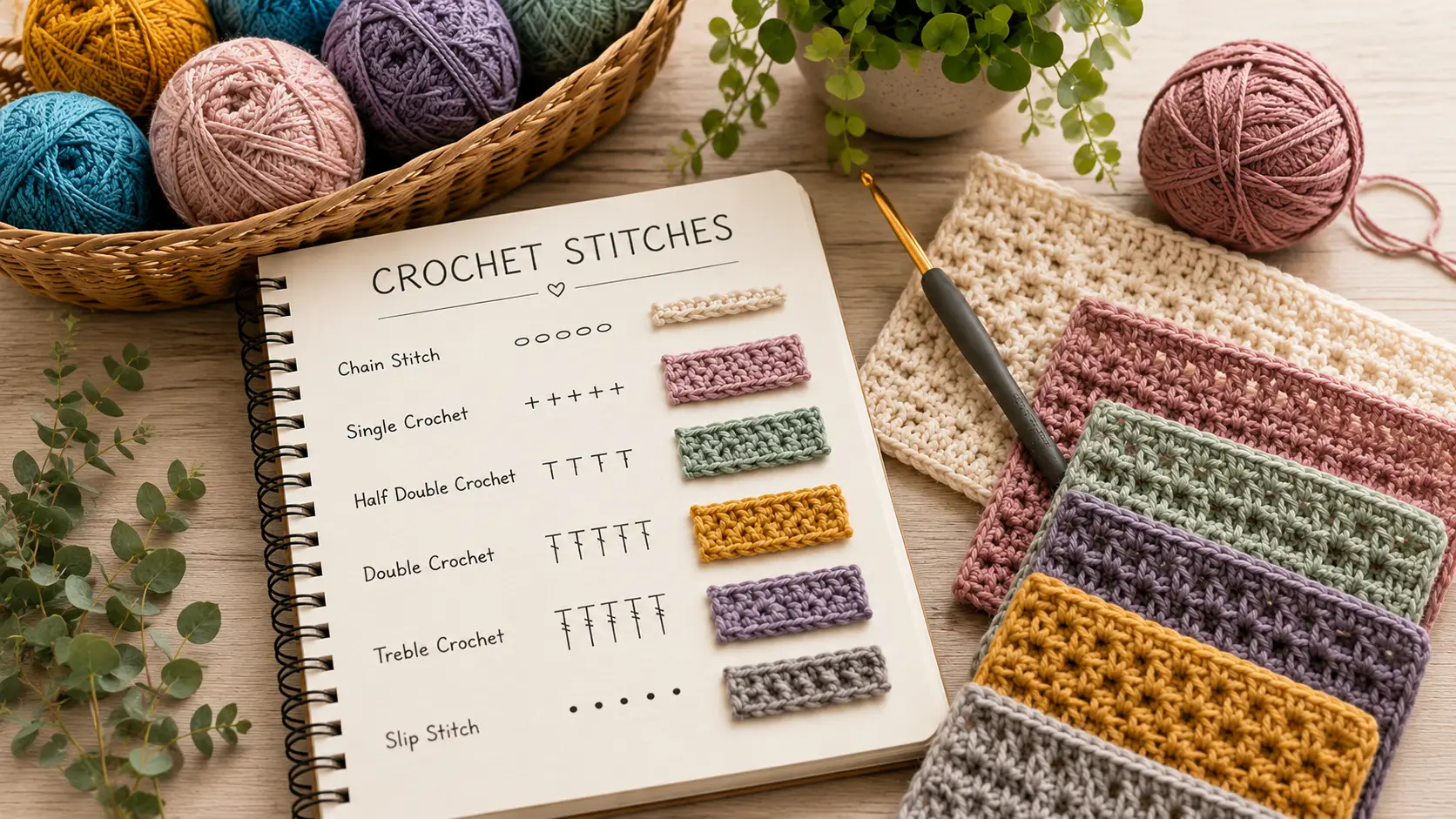
Techniques work hand in hand with stitches, shapes, and patterns. Explore how they connect.
Start With the Magic Ring
The magic ring is the gateway to working in the round — and to hats, baskets, and amigurumi. It is the perfect first technique to master after the basics.
Learn the Magic Ring →